Kazakhstan’s Constitutional Reform Signals a New Political Direction
Institutional restructuring and governance changes redefine state and society relations
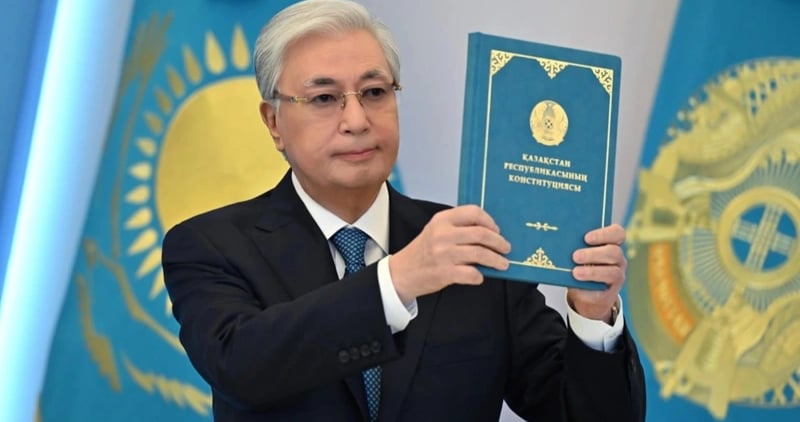
Kazakhstan President Kassym-Jomart Tokaev speaks during his televised address to the nation.
More than 87% of voters supported Kazakhstan’s new constitution in a nationwide referendum (жалпыұлттық референдум) [jalpyūlttyq referendum] held on March 15, with voter turnout (сайлаушылардың қатысуы) [sailaushylar qatysuy] exceeding 73%. The result represents a clear mandate for institutional change and marks a decisive moment in the country’s political development following years of gradual reform efforts.
The adopted framework introduces a unicameral legislature (бір палаталы парламент) [bır palataly parlament] in place of the previous bicameral structure, alongside the creation of the Halyk Kenesi, a consultative body (кеңесші орган) [keñesshı organ] designed to facilitate national dialogue. Additionally, the introduction of a vice presidency aims to ensure clearer political succession (билік сабақтастығы) [bılık sabaqtastyğy] at the executive level, reducing uncertainty during transitions of power.
These constitutional changes are part of a longer-term governance reform strategy (басқару реформасы стратегиясы) [basqaru reformasy strategïiasy] focused on redistributing authority and reducing institutional ambiguity. Authorities have framed the reforms as an effort to reinforce state accountability (мемлекеттік есептілік) [memlekettık eseptılık] and address persistent issues such as corruption and nepotism, which have historically affected political and administrative systems.
Supporters present the reform package as a structural shift toward the common good (ортақ игілік) [ortaq igılık], reflected in the widely cited formula of “a strong president, an influential parliament, and an accountable government.” This model emphasizes a balance between executive authority and legislative influence while maintaining a unified direction in policy-making.
External reactions to the reforms have been mixed. Some analysts interpret the changes as a step toward more efficient institutional coordination (институционалдық үйлестіру) [institucïonaldyq üilestıru], while others warn that prioritizing stronger governance could constrain human rights protections (адам құқықтарын қорғау) [adam quqyqtaryn qorğau] and slow sociopolitical development. Critics have also suggested that the reforms may signal tighter political control.
However, such interpretations are described by supporters as overstated. The reforms are positioned as part of a broader effort to strengthen civic participation (азаматтық қатысу) [azamattyq qatysu] and improve collective well-being rather than preserve elite dominance. The constitutional process is presented as aligned with a wider reform agenda that seeks to modernize governance while maintaining internal stability.
In a policy article published on March 31, President Tokayev described Kazakhstan as a rules-based state (ережелерге негізделген мемлекет) [erezhelerge negızdelgen memleket], highlighting commitments to judicial independence (сот тәуелсіздігі) [sot täuelsızdıgı] and institutional impartiality. This positioning distinguishes Kazakhstan within the regional context, although practical implementation remains subject to observation over time.
Tokayev emphasized that “The new constitution is about people, not just better government.” The document includes extensive provisions on individual rights (жеке құқықтар) [jeke quqyqtar], such as privacy, personal data protection, property ownership, and home inviolability. It also reinforces legal guarantees to ensure access to fair defense (әділ қорғаныс) [ädıl qorğanıs], with constitutional amendments requiring public referendums to preserve democratic legitimacy.
Economic implications also form a central component of the reform. The constitution aims to establish clearer regulatory frameworks (реттеуші негіздер) [retteushı negızder] for business activity, enhancing predictability for both domestic and foreign investors. Authorities argue that these measures will reduce practices such as rent-seeking behavior (рента іздеу әрекеті) [renta ızdeu äreketı] and contribute to a more transparent economic environment.
The reforms are also presented as reinforcing Kazakhstan’s position as a regional leader in foreign direct investment (тікелей шетел инвестициялары) [tıkelеi shetel ïnvestïcïialary], with the country reportedly attracting nearly 70% of total inflows in Central Asia. By promoting investor confidence and reducing structural inefficiencies, the government aims to strengthen long-term economic competitiveness.
At a broader level, the new constitutional framework reflects an emphasis on civic responsibility (азаматтық жауапкершілік) [azamattyq jauapkerşılık] and moral values as foundational elements of governance. Supporters argue that this approach is necessary in a context of increasing global instability, where purely individualistic models may not provide sufficient cohesion for state-building.
This perspective has drawn criticism from some observers who question the balance between individual freedoms (жеке бостандықтар) [jeke bostandyqtar] and collective priorities. Nonetheless, proponents argue that the integration of tradition and social norms reflects the realities of Kazakh society and contributes to long-term national stability.
Specific constitutional provisions illustrate these priorities. Article 30 defines marriage explicitly as a legal union (заңды одақ) [zañdy odaq] between a man and a woman, while also codifying family obligations (отбасылық міндеттер) [otbasylyq mındetter], including parental responsibilities and duties of adult children toward their parents. These provisions have received support from advocates of traditional social structures while drawing criticism from others.
Another contested measure is Article 6, which mandates transparency regarding foreign funding disclosures (шетелдік қаржыландыруды жариялау) [sheteldık qarjylandyrudy jariyalau] for non-profit organizations. Critics argue that such requirements could limit independent civil society activity, whereas supporters frame them as safeguards against external influence.
Ultimately, the effectiveness of these reforms will depend on measurable outcomes in areas such as economic stability (экономикалық тұрақтылық) [ekonomïkalyq turaqtylyq], employment, public safety, and national cohesion. Kazakhstan’s leadership has acknowledged that long-term success will be determined not by constitutional design alone but by its impact on everyday life and institutional performance.
For requests or suggestions: pr@kazakhinstitute.com


Learn the official language of Kazakhstan in 30 days thanks to the most complete grammar, vocabulary and culture courses available online.
Start speaking Kazakh today!
© Copyright 2026 Kazakh Institute
Come visit Kazakhstan!