
Kazakhstan to Reintroduce Tigers with Arrival of Amur Species from Russia
Ambitious conservation project aims to restore a self-sustaining predator population after decades of extinction
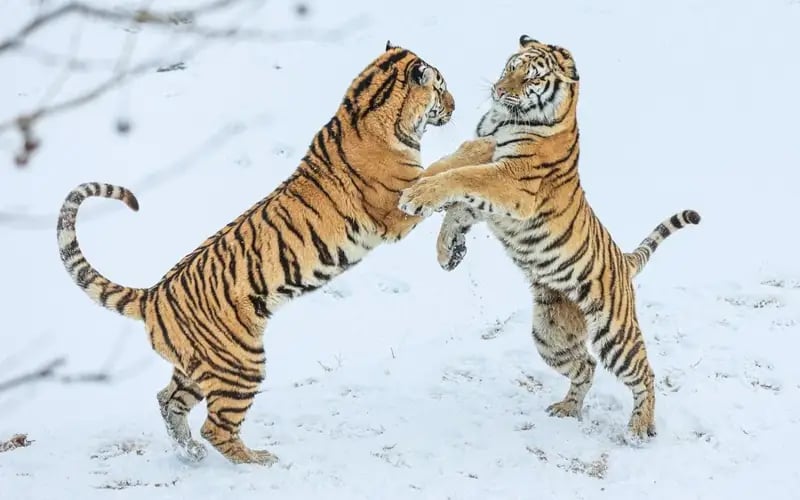
Amur tigers take their first steps in Kazakhstan's winter.
Kazakhstan is making another effort to reintroduce Turan tigers into the wild, with four Amur tigers expected to arrive from Russia this year as part of a broader initiative to rebuild a sustainable population in their historical habitat. This effort reflects a major step in wildlife reintroduction programs (жабайы табиғатқа қайта енгізу бағдарламалары) [jabaiy tabiğatqa qayta engizu bağdarlamalary] and long-term species restoration efforts (түрлерді қалпына келтіру әрекеттері) [türlerdi qalpyna keltiru äreketteri].
The initiative aims to establish a self-reproducing tiger population in the Ile-Balkhash region in southeastern Kazakhstan over the next several years, restoring ecosystems and ensuring long-term survival. According to officials, this project supports ecosystem restoration goals (экожүйені қалпына келтіру мақсаттары) [ekojüieni qalpyna keltiru maqsattary] and contributes to biodiversity recovery strategies (биоалуантүрлілікті қалпына келтіру стратегиялары) [bioaluan türliliktі qalpyna keltiru strategiyalary].
“The transport of these tigers is being carried out under a bilateral agreement between Kazakhstan and the Russian Federation. Their arrival is currently being coordinated by the relevant government departments of both countries and forms part of an intergovernmental project,” said the committee in a written comment. This cooperation highlights the importance of cross-border conservation cooperation (шекарааралық табиғатты қорғау ынтымақтастығы) [şekaraaralıq tabiğattı qorğau yntymaktastyğı] and international wildlife agreements (халықаралық жабайы табиғат келісімдері) [halyqaralyq jabaiy tabiğat kelisimderi].
The project builds on a 2017 memorandum signed by Kazakhstan and the World Wide Fund for Nature (WWF) to revive the Turanian tiger population, also known as the Caspian tiger. By the start of the 21st century, tigers remained in just 13 countries worldwide, as their decline was driven by hunting, loss of prey and habitat destruction. These trends illustrate the broader impact of habitat degradation factors (мекендеу ортасының бұзылу факторлары) [mekendeu ortasynyñ buzylu faktorları] and wildlife population decline (жануарлар санының азаюы) [jandarlar sanynyñ azayuı].
The last confirmed records of Turan tigers in Central Asia date back to the 1970s, while in Kazakhstan the species was last recorded in 1948. Historically, these tigers ranged widely across Central Asia, but large-scale irrigation, deforestation and human pressure led to their extinction in the region. This underscores the consequences of environmental transformation processes (қоршаған ортаның өзгеру процестері) [qorşağan ortanyñ özg er u processteri] and human-induced habitat loss (адам әрекетінен болатын мекендеу ортасының жоғалуы) [adam äreketinen bolatyn mekendeu ortasynyñ joğaluy].
Kazakhstan announced its intention to restore the species at the International Tiger Conservation Forum in 2010. Subsequent research identified the Ili River delta and southern Balkhash region as suitable habitats. In 2018, the Ile-Balkhash State Nature Reserve was established, covering over 415,000 hectares and including wetlands, forests and river ecosystems, contributing to protected area development (қорғалатын аумақтарды дамыту) [qorğalatyn aumaqtardy damytu] and habitat conservation planning (мекендеу ортасын сақтау жоспарлау) [mekendeu ortasyn saqtau josparlau].
Officials explain that the choice of the Amur tiger is based on scientific evidence. Genetic research in 2009 showed that the extinct Turan tiger and the Amur tiger are nearly identical. Early adaptation results are promising, as two Amur tigers previously transferred to the reserve have demonstrated stable behavior and good health. This supports the feasibility of genetic conservation strategies (генетикалық сақтау стратегиялары) [genetikalyq saqtau strategiyalary] and species adaptation processes (түрлердің бейімделу процестері) [türlerdiñ beýimdelu processteri].
Reintroducing a top predator requires rebuilding the entire ecosystem, including prey populations. Authorities have already introduced 119 kulans and around 200 Bukhara deer to restore the food chain. Additional measures include constructing enclosures, installing watering systems and supporting animal adaptation. These efforts reflect integrated ecosystem rebuilding measures (экожүйені қалпына келтіру шаралары) [ekojüieni qalpyna keltiru şaralary] and food chain restoration processes (қоректік тізбекті қалпына келтіру процестері) [qorektik tizbekti qalpyna keltiru processteri].
Monitoring data indicates that populations of key prey species, such as wild boar, are increasing, providing sufficient resources for tiger reintroduction. Experts emphasize the importance of maintaining balance through wildlife population monitoring systems (жануарлар популяциясын бақылау жүйелері) [jandarlar populyaciyasyn baqylau jüieleri] and ensuring ecological balance maintenance (экологиялық тепе-теңдікті сақтау) [ekologiyalyq tepe teñdikti saqtau].
The program is supported by international partners, including the WWF and the United Nations Development Programme, with funding also provided by Kazakhstan’s state budget. This collaboration demonstrates the role of international conservation funding (халықаралық табиғатты қорғау қаржыландыруы) [halyqaralyq tabiğattı qorğau qarjılandyruy] and multi-stakeholder environmental projects (көп тарапты экологиялық жобалар) [köp taraptı ekologiyalyq jobalar].
Once the tigers arrive, they will initially be kept in enclosures for adaptation, where their health and behavior will be closely monitored using modern technologies. This phase involves controlled wildlife adaptation (бақыланатын бейімделу кезеңі) [baqylanatyn beýimdelu kezeñi] and detailed biological monitoring procedures (биологиялық бақылау рәсімдері) [biologiyalyq baqylau räsimderi].
After release, tigers will be tracked using GPS collars, camera traps and field observation. These technologies allow near real-time tracking and early detection of risks, supporting satellite tracking systems (спутниктік бақылау жүйелері) [sputniktik baqylau jüieleri] and wildlife movement monitoring (жануарлардың қозғалысын бақылау) [jandarlarniñ qozğalysyn baqylau].
To address safety concerns, authorities have implemented measures such as virtual fencing technology and rapid-response teams to prevent human-wildlife conflict. These safeguards are crucial for protecting nearby communities and ensuring coexistence, emphasizing human-wildlife conflict prevention (адам мен жануар қақтығысын болдырмау) [adam men jandar qaqtyğysyn boldyrmau] and risk management protocols (тәуекелдерді басқару хаттамалары) [täuekelderdi basqaru hattamalary].
“If a signal indicates that an animal has moved beyond its designated range, a response protocol is turned on: patrols are intensified, relevant authorities and local residents are notified, and anti-conflict teams are deployed to the area of potential movement,” said the committee. “If necessary, established response measures are implemented, including steering the animal away from high-risk areas or in some cases, temporarily removing it and placing it in an enclosure under the supervision of specialists,” it added.
If successful, the project would become a rare example of large-scale predator restoration, bringing back a species that once inhabited Central Asia’s ecosystems. Experts note that such initiatives require sustained commitment, scientific planning and international cooperation, reinforcing the importance of long-term conservation success (ұзақ мерзімді табиғатты қорғау табысы) [uzaq merzimdi tabiğattı qorğau tabysy] and sustainable ecosystem management (тұрақты экожүйе басқаруы) [turaqty ekojüie basqaruy].
Key Kazakh Vocabulary
жабайы табиғатқа қайта енгізу бағдарламалары [jabaiy tabiğatqa qayta engizu bağdarlamalary] wildlife reintroduction programs
түрлерді қалпына келтіру әрекеттері [türlerdi qalpyna keltiru äreketteri] species restoration efforts
экожүйені қалпына келтіру мақсаттары [ekojüieni qalpyna keltiru maqsattary] ecosystem restoration goals
биоалуантүрлілікті қалпына келтіру стратегиялары [bioaluan türliliktі qalpyna keltiru strategiyalary] biodiversity recovery strategies
шекарааралық табиғатты қорғау ынтымақтастығы [şekaraaralıq tabiğattı qorğau yntymaktastyğı] cross-border conservation cooperation
халықаралық жабайы табиғат келісімдері [halyqaralyq jabaiy tabiğat kelisimderi] international wildlife agreements
мекендеу ортасының бұзылу факторлары [mekendeu ortasynyñ buzylu faktorları] habitat degradation factors
жануарлар санының азаюы [jandarlar sanynyñ azayuı] wildlife population decline
қоршаған ортаның өзгеру процестері [qorşağan ortanyñ özgеру processteri] environmental transformation processes
адам әрекетінен болатын мекендеу ортасының жоғалуы [adam äreketinen bolatyn mekendeu ortasynyñ joğaluy] human-induced habitat loss
қорғалатын аумақтарды дамыту [qorğalatyn aumaqtardy damytu] protected area development
мекендеу ортасын сақтау жоспарлау [mekendeu ortasyn saqtau josparlau] habitat conservation planning
генетикалық сақтау стратегиялары [genetikalyq saqtau strategiyalary] genetic conservation strategies
түрлердің бейімделу процестері [türlerdiñ beýimdelu processteri] species adaptation processes
экожүйені қалпына келтіру шаралары [ekojüieni qalpyna keltiru şaralary] ecosystem rebuilding measures
қоректік тізбекті қалпына келтіру процестері [qorektik tizbekti qalpyna keltiru processteri] food chain restoration processes
жануарлар популяциясын бақылау жүйелері [jandarlar populyaciyasyn baqylau jüieleri] wildlife population monitoring systems
экологиялық тепе-теңдікті сақтау [ekologiyalyq tepe teñdikti saqtau] ecological balance maintenance
халықаралық табиғатты қорғау қаржыландыруы [halyqaralyq tabiğattı qorğau qarjılandyruy] international conservation funding
көп тарапты экологиялық жобалар [köp taraptı ekologiyalyq jobalar] multi-stakeholder environmental projects
бақыланатын бейімделу кезеңі [baqylanatyn beýimdelu kezeñi] controlled wildlife adaptation
биологиялық бақылау рәсімдері [biologiyalyq baqylau räsimderi] biological monitoring procedures
спутниктік бақылау жүйелері [sputniktik baqylau jüieleri] satellite tracking systems
жануарлардың қозғалысын бақылау [jandarlarniñ qozğalysyn baqylau] wildlife movement monitoring
адам мен жануар қақтығысын болдырмау [adam men jandar qaqtyğysyn boldyrmau] human-wildlife conflict prevention
тәуекелдерді басқару хаттамалары [täuekelderdi basqaru hattamalary] risk management protocols
ұзақ мерзімді табиғатты қорғау табысы [uzaq merzimdi tabiğattı qorğau tabysy] long-term conservation success
тұрақты экожүйе басқаруы [turaqty ekojüie basqaruy] sustainable ecosystem management
For requests or suggestions: pr@kazakhinstitute.com


Learn the official language of Kazakhstan in 30 days thanks to the most complete grammar, vocabulary and culture courses available online.
Start speaking Kazakh today!
© Copyright 2026 Kazakh Institute
Come visit Kazakhstan!