Kazakhstan and South Korea Strengthen Strategic Partnership Through High-Level Diplomacy
Bilateral cooperation expands across trade, investment, and regional integration frameworks
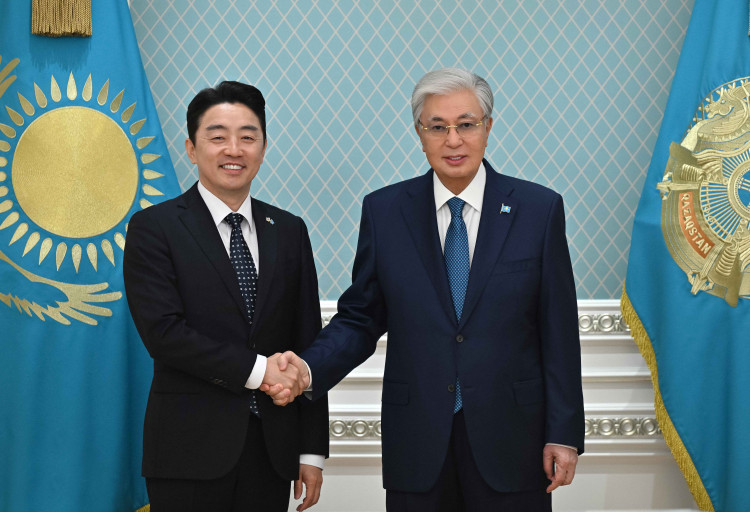
Kazakh President Kassym-Jomart Tokayev accepted an invitation to visit Seoul during an April 8 meeting with South Korean Presidential Chief of Staff Kang Hoon-sik
During a high-level meeting in Astana, Kazakhstan’s leadership reaffirmed its commitment to deepening ties with the Republic of Korea, describing it as a key strategic partner (стратегиялық әріптес) [strategïialyq ärıptes]. The discussions highlighted the steady expansion of bilateral relations (екіжақты қатынастар) [ekıjaqty qatynastar], reflecting growing alignment between the two countries in economic and political spheres.
The visit of the Korean presidential envoy was characterized as an important step in reinforcing diplomatic engagement (дипломатиялық өзара іс-қимыл) [dïplomatïialyq özara is-qïmyl] and maintaining continuity in high-level communication. Kazakhstan’s leadership emphasized the importance of sustained dialogue in ensuring long-term cooperation and expressed confidence in continued progress through joint efforts (бірлескен күш-жігер) [bırlesken küş-jıger].
The Korean delegation underscored its intention to elevate relations through expanded trade and economic cooperation (сауда-экономикалық ынтымақтастық) [sauda-ekonomïkalyq yntymaqtastyq] and increased investment flows (инвестициялық ағындар) [ïnvestïcïialyq ağyndar]. Both sides identified opportunities for collaboration across multiple sectors, aiming to create more diversified and resilient economic ties.
Key areas of discussion included the development of energy cooperation (энергетикалық ынтымақтастық) [energetïkalyq yntymaqtastyq], as well as improvements in transport and logistics networks (көлік және логистика желілері) [kölık jäne logïstïka jelılerı]. These sectors are considered critical in the context of ongoing global market challenges, where supply chain resilience and infrastructure connectivity play an increasingly important role.
The meeting also addressed broader regional frameworks, including preparations for the upcoming multilateral summit (көпжақты саммит) [köpjaqty sammit] between Central Asia and the Republic of Korea. This initiative reflects efforts to institutionalize cooperation at a regional level and strengthen interregional partnerships (өңіраралық әріптестік) [öñıraaralyq ärıptestık].
An official invitation was extended for a future state visit to Seoul, which is expected to include participation in the first Central Asia–Republic of Korea summit. This event is anticipated to enhance regional integration (аймақтық интеграция) [aimaqtyq ïntegracïia] and facilitate coordinated policy approaches among participating countries.
Kazakhstan’s leadership accepted the invitation and expressed confidence that upcoming negotiations would further consolidate economic collaboration (экономикалық ынтымақтастық) [ekonomïkalyq yntymaqtastyq] and deepen institutional ties. The dialogue reflects a broader strategy aimed at strengthening international partnerships and positioning Kazakhstan within evolving geopolitical and economic networks.
The discussions also demonstrate Kazakhstan’s continued focus on expanding its role in global affairs through structured cooperation mechanisms, emphasizing stability, mutual benefit, and long-term development across interconnected sectors.
For requests or suggestions: pr@kazakhinstitute.com
Learn the official language of Kazakhstan in 30 days thanks to the most complete grammar, vocabulary and culture courses available online.
Start speaking Kazakh today!
© Copyright 2026 Kazakh Institute
Come visit Kazakhstan!